What to expect during a garage floor epoxy installation, step by step
By Hannah Nair · Updated 2026-06-10
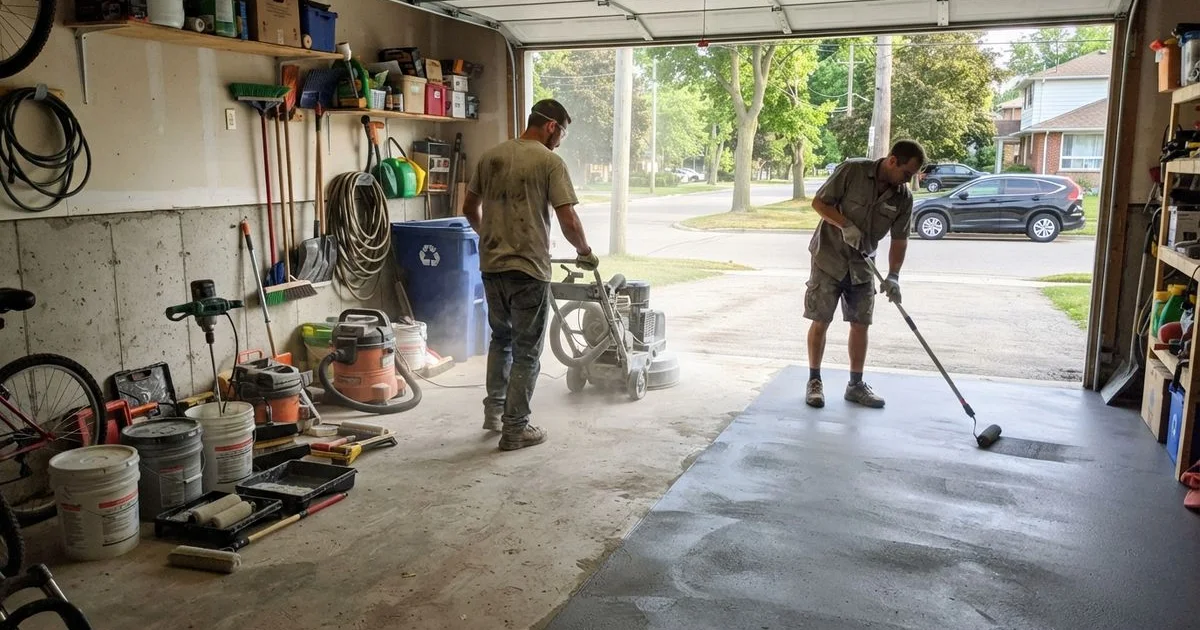
A garage floor coating looks simple from the outside: grind, coat, done. What actually happens over those one to three days determines whether the floor lasts five years or fifteen. Here is what a proper installation looks like, so you know what a good crew is doing and what to ask about if a quote skips a step.
If you have not picked an installer yet, the garage floor coating category on the Ontario Epoxy Flooring Directory is a good place to compare crews on rating and recent jobs before you book.
Day one: prep and diagnosis
Before any coating goes down, the concrete has to be mechanically prepared, usually by diamond grinding, to open the surface so the epoxy actually bonds instead of sitting on top like paint. A crew skipping this step and relying on an acid etch instead is cutting a corner that shows up later as peeling.
While grinding, a good installer checks for:
- Cracks, which get filled with an epoxy or polyurethane crack filler before coating.
- Moisture, tested with a simple surface test or, on a bigger job, a calcium chloride test if the slab is older or below grade.
- Contamination, oil stains and old sealer residue that need extra degreasing or grinding passes to remove.
Expect the garage to be closed off with dust barriers and a vacuum-attached grinder running for a few hours. This is the loudest, dustiest part of the job.
Day one or two: primer and base coat
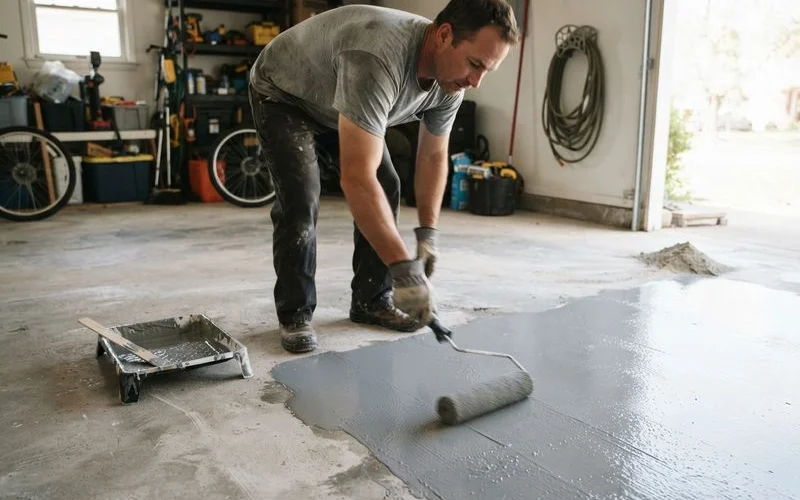
Once the slab is clean and dry, most systems start with a primer coat that soaks into the open pores of the ground concrete. The base colour coat goes on next, usually rolled or squeegeed across the floor in sections working toward the garage door.
If you chose a flake broadcast finish, this is when the coloured chips get thrown across the wet base coat, either lightly for an accent look or fully broadcast to refusal for a solid speckled floor.
Curing between coats
Each coat needs time to set before the next one goes on, and this is where basic epoxy and polyaspartic diverge most. Standard epoxy coats typically need 12 to 24 hours between layers, which is why a basic job stretches over two or three days. Polyaspartic coats can often be recoated within a few hours, which is the main reason those jobs sometimes finish start to finish in a single day.
| Stage | Standard epoxy | Polyaspartic |
|---|---|---|
| Grind and prep | 3–5 hours | 3–5 hours |
| Time between coats | 12–24 hours | 2–6 hours |
| Typical total project time | 2–3 days | 1–2 days |
| Safe for foot traffic | 24 hours after final coat | 12–24 hours after final coat |
| Safe for vehicles | 5–7 days after final coat | 24–72 hours after final coat |
Topcoat and final cure
The last layer is usually a clear topcoat, which protects the colour or flake layer underneath and adds most of the chemical and UV resistance. Once it is down, the crew will tell you exact wait times for foot traffic and for driving on the floor. Pushing those timelines, especially getting a vehicle back on the floor too soon, is one of the more common reasons a coating shows tire marks or soft spots within the first year.
What a rushed job looks like versus a proper one
A crew that grinds for an hour instead of half a day, skips a moisture test on an older slab, or has you parking in the garage the same evening the last coat goes down is cutting corners somewhere. None of those shortcuts are visible on the invoice, only in how the floor holds up over the following two winters. Ask for the specific cure schedule in writing before the job starts, and compare it against the ranges above. The system you pick here also drives the number on the quote, covered in our garage floor epoxy cost guide.
Questions worth asking before you book
Beyond the cure schedule, ask how the crew handles unexpected findings, a deeper crack, moisture readings that come back high, or old sealer that needs extra grinding to remove. A clear answer on how that changes the price and timeline, before it happens, avoids an awkward mid-job conversation. For more on how the directory scores and verifies installers before featuring them, see our methodology.
FAQ
- How long does a garage floor epoxy job take?
- Most single or double garage jobs take one to three days on site: grinding and prep, then two or more coats applied over consecutive days. Polyaspartic systems can sometimes finish in a single day because each coat cures faster.
- Do I need to empty the garage before the crew arrives?
- Yes. The floor needs to be completely clear, including shelving units bolted to the slab if the coating runs to the wall. Most installers will tell you exactly how empty the space needs to be when they book the job.
- Can I stay in the house while the work happens?
- Generally yes, though grinding is loud and coating application has an odour, so keep the garage closed off from living space and ventilate if the garage shares a wall or door with the house.
- What happens if it rains or the temperature drops during the job?
- Epoxy and polyaspartic coatings both have minimum temperature and humidity requirements to cure properly. A reputable installer will reschedule rather than coat in conditions outside the product's range, since a bad cure shows up later as bubbling or a soft finish.
Related on this site
- Browse garage floor coating providers
- What garage floor epoxy coating costs in Ontario, and what changes the price
- Getting your garage floor ready for an Ontario winter
- Concrete polishing vs resurfacing: how each process works and which one you need
- Choosing a finish for your epoxy floor: solid colour, metallic or flake
- All guides →