Getting your garage floor ready for an Ontario winter
By Hannah Nair · Updated 2026-06-15
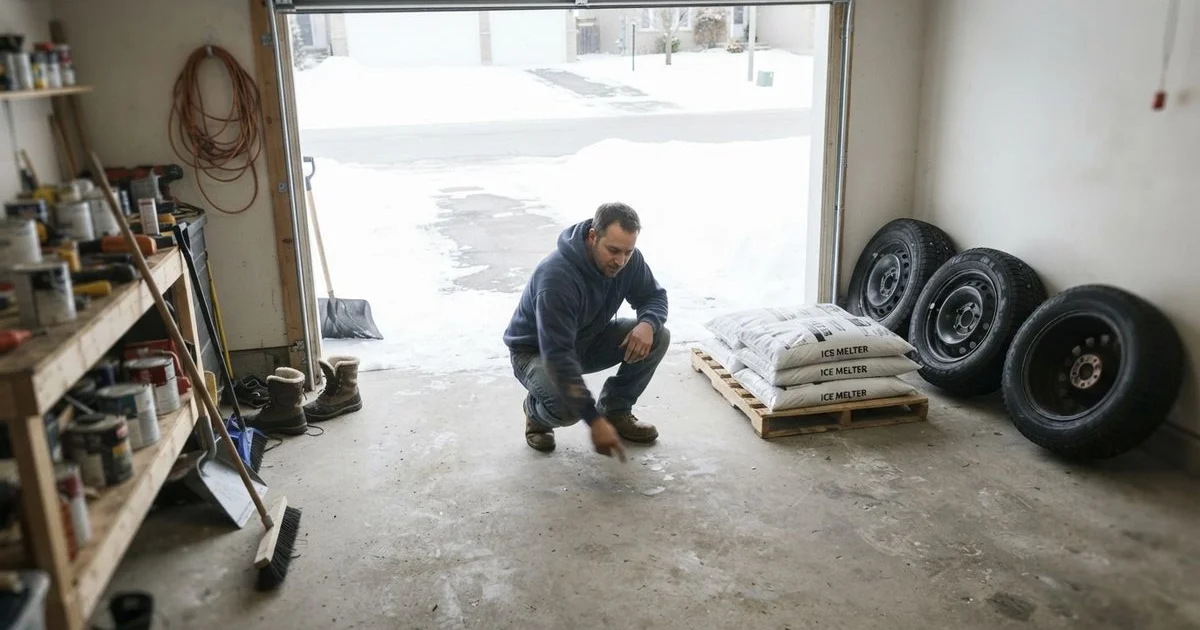
Every Ontario winter, uncoated garage floors take a beating that most homeowners do not notice until spring, when the surface is pitted, flaking, or covered in white salt staining that will not scrub off. None of that is inevitable. A coated floor handles a winter of road salt, slush, and freeze-thaw cycling without the damage, but timing and prep matter if you want the coating done before the cold sets in.
The garage floor coating hub on the Ontario Epoxy Flooring Directory lists installers who work through the fall booking rush, which is worth checking before availability tightens up.
Why winter is hard on an uncoated slab
Bare concrete is porous. Every time a vehicle drives in with salt-covered tires or slush drips off a boot, that moisture and salt soak into the surface. When temperatures drop below freezing overnight, the trapped water expands, and that expansion pushes apart the top layer of concrete. Do this dozens of times over a winter and the surface starts to flake, a process called spalling. A few winters of this and you end up with a pitted, rough floor that is harder to clean and starts to look genuinely worn.
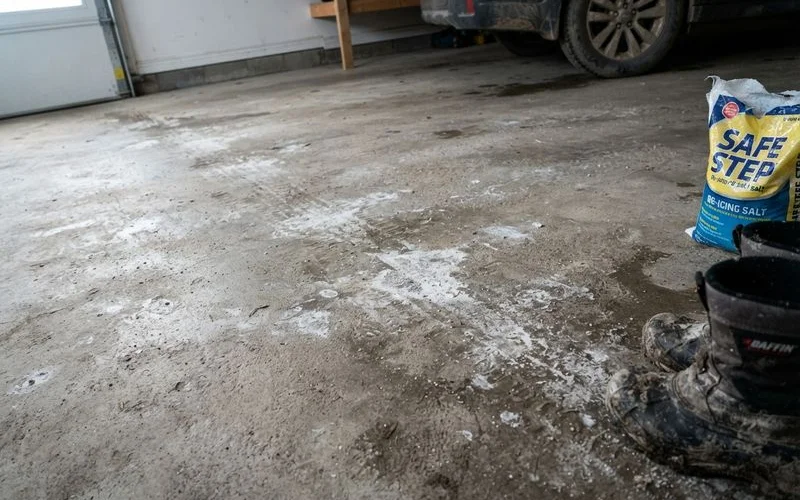
Salt itself also leaves a white, chalky residue known as efflorescence when it dries on porous concrete, which is cosmetic but unsightly and tends to get tracked into the house on boots and paws.
What an epoxy or polyaspartic coating actually changes
A properly applied coating seals the concrete surface so water and salt cannot penetrate it. That stops spalling entirely, since there is no exposed porous concrete for moisture to soak into and freeze. It also makes the floor far easier to clean, salt residue and slush sit on top of a sealed surface instead of soaking in, so a quick sweep or hose-down at the end of winter clears it out.
| Winter condition | Uncoated concrete | Coated floor |
|---|---|---|
| Road salt exposure | Soaks in, leaves residue, contributes to pitting | Sits on surface, rinses off easily |
| Freeze-thaw cycling | Causes surface spalling over time | No moisture penetration, no spalling |
| Slush and moisture tracking | Absorbs into slab | Beads and wipes up |
| Cleaning effort | Requires scrubbing, staining persists | Sweep or rinse, most stains lift |
Timing a fall coating job
Both epoxy and polyaspartic coatings need the concrete and the surrounding air to stay within a specific temperature and humidity range while curing, typically above 10°C, though exact numbers vary by product. In most of Ontario that means late summer through mid-fall is the practical window for a garage job, since installers will not coat a floor once overnight temperatures start dropping consistently below the cure threshold. If you are planning to coat before winter, book in August or September rather than waiting until the first cold snap makes you scramble to find an installer with availability. Once you have a booking, our step-by-step installation guide covers what happens once the crew arrives.
If your floor is already showing winter wear
Spalling and salt staining do not mean you need a full slab replacement. In most cases an installer grinds off the damaged surface layer, patches any deeper pitting, and coats over the repaired concrete. The grinding step actually works in your favour here, since it is the same surface prep a coating needs anyway. Get the floor assessed before the damage spreads across more of the slab; a small pitted area left untreated tends to expand each winter as more concrete gets exposed.
Living with a coated floor through winter
A sealed floor is not maintenance-free, it just needs less of it. Sweep or rinse off accumulated salt and slush periodically rather than letting it sit, since standing slush can still leave a faint residue on the coating’s surface over time even if it cannot damage the concrete underneath. A quick rinse every few weeks through the winter keeps the floor looking new well past the first year.
A rubber-backed mat under the spot where vehicles typically drip during the worst weeks of the season is a small extra step that catches most of the slush before it spreads across the whole floor, cutting down on how often a full rinse is needed. See our methodology for how installers on this directory are scored and ranked.
FAQ
- Can I get a garage floor coated in the fall before winter?
- Yes, as long as temperature and humidity stay within the product's cure range, usually above 10°C for epoxy. Early fall is a common booking window in Ontario, and most installers get busier the closer it gets to the first frost.
- Why does salt damage an uncoated concrete garage floor?
- Road salt carried in on tires and boots draws moisture into the concrete's surface. Repeated freeze-thaw cycles then expand that trapped moisture, which flakes and pits the top layer of concrete over a few winters. This is called spalling.
- Does an epoxy coating stop salt damage completely?
- A properly applied coating seals the concrete so salt and moisture cannot soak in, which stops spalling. It will not stop salt residue from building up on the surface, so the floor still needs regular rinsing or sweeping through the winter.
- Is polyaspartic better than epoxy for cold-weather durability?
- Polyaspartic tends to hold up slightly better in temperature swings because it stays more flexible in the cold, which matters for a garage that goes from below freezing to a warm afternoon and back. Either system works well if installed correctly.
Related on this site
- Browse garage floor coating providers
- What garage floor epoxy coating costs in Ontario, and what changes the price
- What to expect during a garage floor epoxy installation, step by step
- Basement flooding and epoxy floors: what to do and when to recoat
- Coating your floors before selling your house in Ontario
- All guides →