Choosing a finish for your epoxy floor: solid colour, metallic or flake
By Hannah Nair · Updated 2026-07-20
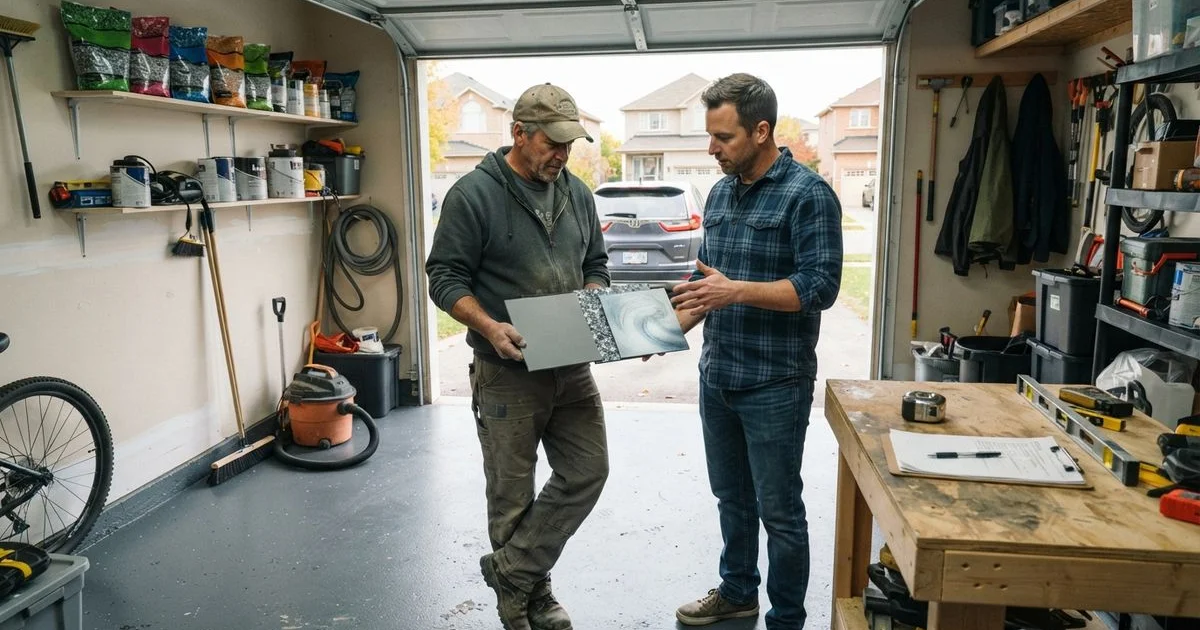
The finish you choose changes more than the look of your floor. It affects price, how well the surface hides everyday wear, and how much skill the installation actually requires. Here is how the three common options compare.
The decorative and metallic epoxy category on the Ontario Epoxy Flooring Directory lists installers who specialize in these finishes, worth checking since decorative work varies a lot in execution quality between crews.
Solid colour epoxy
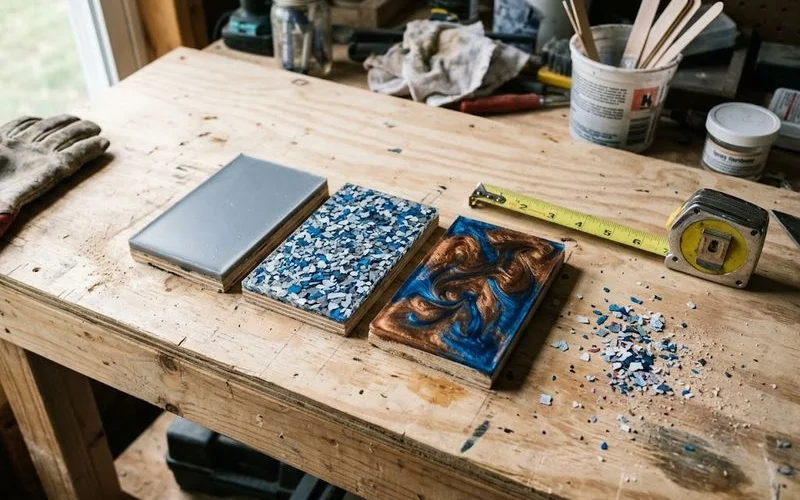
A single, uniform colour across the entire floor. This is the most straightforward finish to apply and the least expensive of the three, since it does not require the extra material or technique that flake or metallic finishes need. It gives a clean, consistent look that works well in garages, basements, and utility spaces where a simple, tidy floor is the goal rather than a decorative statement.
The tradeoff is that solid colour shows dust, scuffs, and tire marks more readily than a multi-tone finish, particularly in darker colours, so it needs more regular sweeping to keep looking fresh.
Flake broadcast epoxy
Coloured vinyl chips get scattered, or broadcast, into the wet base coat, either lightly for an accent scattering or fully to refusal for a dense, speckled look. This is the most popular finish for garages because the multi-coloured texture hides dirt, oil residue, and everyday wear far better than a solid colour, while still costing meaningfully less than metallic.
Flake colour blends range from subtle neutral tones to bold multi-colour mixes, and the density of the broadcast (how much chip coverage) is adjustable, giving a fair amount of customization within a moderate budget.
Metallic epoxy
Metallic pigments, fine mica or metal powder suspended in the epoxy, get manipulated across the wet coat using tools, air, or specific application techniques to create a fluid, marbled, almost three-dimensional look. No two metallic floors turn out identical, which is part of the appeal, but also means the result depends heavily on the installer’s skill and experience with the technique.
Metallic is the most expensive of the three options and the least forgiving to install well. A poorly executed metallic job can look muddy or uneven rather than the intended fluid effect, so this is the finish where checking an installer’s past work matters most.
| Solid colour | Flake broadcast | Metallic | |
|---|---|---|---|
| Relative cost | Lowest | Moderate | Highest |
| Hides dirt and wear | Lower | High | Moderate–high |
| Installation skill required | Basic | Moderate | High |
| Look | Uniform, clean | Textured, speckled | Fluid, marbled, unique |
| Best for | Utility spaces, budget-focused jobs | Garages, workshops, high-use spaces | Feature floors, showrooms, statement basements |
How to decide
Start with how the space actually gets used. A garage that doubles as a workshop with tools, oil, and heavy foot traffic benefits most from flake’s ability to hide wear. A basement rec room or a showroom floor where the aesthetic is the point leans toward metallic, budget allowing. If the floor is purely functional and cost is the main driver, solid colour does the job without unnecessary spend. If the existing slab is cracked, stained, or uneven rather than bare, our concrete polishing vs resurfacing guide covers how resurfacing sets up the surface for any of these finishes.
Colour and pattern considerations
Within each finish type, colour choice affects how the floor reads over time, not just on install day. Lighter solid colours and lighter flake blends show dirt and stains less noticeably day to day but can look dingier as the floor ages if not cleaned regularly. Darker solid colours look sharp when clean but highlight dust and light scuffing more. Flake blends that mix several colours tend to age the most gracefully of any option, since there is no single dominant tone for wear to stand out against.
For metallic finishes, cooler tones (blues, greys, silvers) tend to produce a more convincing water or marble effect, while warmer tones (ambers, coppers) read more like natural stone. Neither is objectively better, it comes down to the room and personal taste, but seeing physical samples under your own lighting matters more for metallic than for the other two finishes, since photos rarely capture the effect accurately.
Getting a fair comparison
Ask any installer for photos of recent work in the finish you are considering, ideally more than one job, since consistency across projects tells you more about their skill than a single polished portfolio shot. If you are torn between two finishes, ask for pricing on both rather than assuming, since the gap between flake and metallic varies more between installers than the gap between flake and solid colour. Our methodology page explains how installer ratings on this directory are built if you want to see the criteria behind them.
FAQ
- What's the difference between metallic and flake epoxy?
- Metallic epoxy uses mica or metallic pigments swirled through the coating to create a fluid, marbled look with depth. Flake epoxy scatters coloured vinyl chips into the wet base coat for a speckled, textured appearance. They're applied differently and look distinctly different once cured.
- Which finish hides dirt and wear best?
- Flake finishes tend to hide dirt, tire marks, and minor scuffs best because the multi-coloured chips break up the visual field. Solid colours show dust and marks more readily, especially in darker shades, and metallic finishes fall somewhere in between depending on the pattern.
- Is metallic epoxy more expensive than flake or solid colour?
- Yes, metallic is generally the most expensive of the three because it requires more skilled, hand-applied technique to get the swirling effect right. Flake sits in the middle, and solid colour is the most affordable option.
- Can I combine finishes, like flake with a metallic accent?
- Some installers offer hybrid or custom designs combining elements of each, though it depends on the installer's experience with decorative work. Ask to see photos of past custom jobs before committing, since execution varies a lot by skill level.