Concrete polishing vs resurfacing: how each process works and which one you need
By Hannah Nair · Updated 2026-06-20
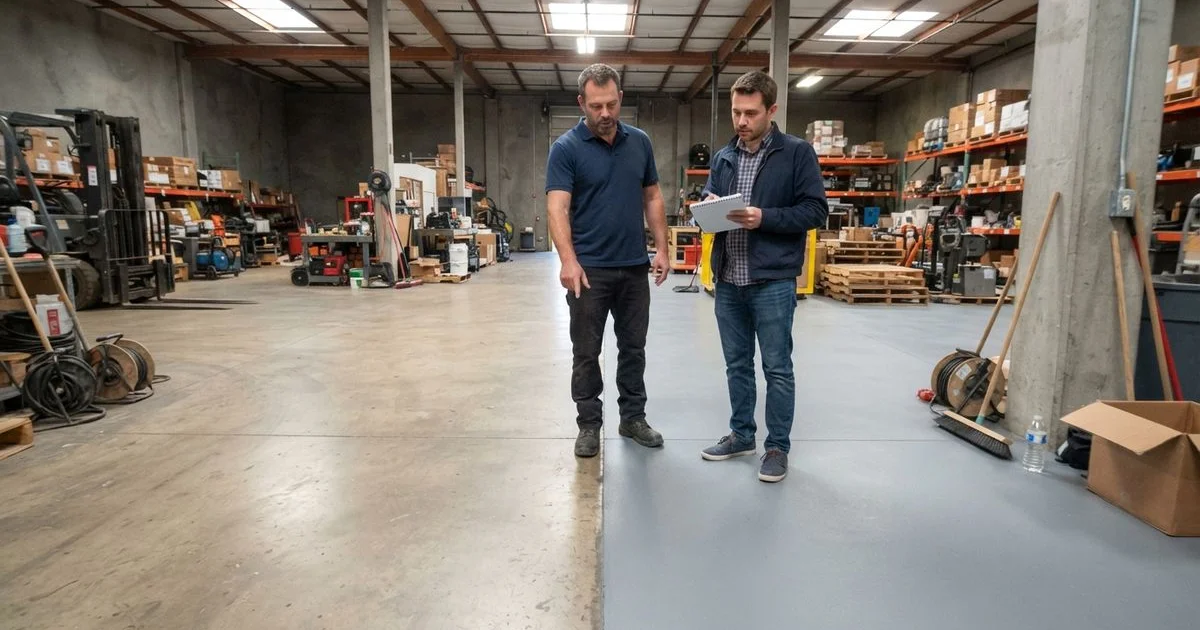
Two people can walk into the same showroom asking for “a nicer floor” and walk out needing completely different processes. Polishing and resurfacing solve different problems, and picking the wrong one means paying twice: once for a polish job that cannot hide the damage you actually have, or once for a resurfacing job when your slab was fine to begin with.
The concrete polishing and resurfacing category lists installers who handle both processes, which is useful since many crews recommend one over the other depending on what they specialize in.
What polishing actually does
Polishing is a mechanical process. A crew runs a sequence of diamond-tipped grinding tools across the existing slab, starting coarse and moving to progressively finer grits, the same idea as sanding wood from rough to smooth. There is no coating applied; the shine comes from compacting and refining the concrete’s own surface, sometimes with a densifier applied partway through to harden the surface as it goes.
Because polishing works with the concrete you already have, it only makes sense on a slab that is structurally sound, without major cracking, and with a colour and finish you are willing to live with, since polishing reveals the concrete’s natural variation rather than covering it.
What resurfacing actually does
Resurfacing applies a new layer on top of the existing concrete, usually an epoxy, polyaspartic, or cementitious overlay. This new layer can be any colour, pattern, or finish, and critically, it hides what is underneath: cracks, stains, patch marks, and colour inconsistencies all disappear under the new surface as long as the slab is structurally stable enough to hold a coating.
| Concrete polishing | Resurfacing | |
|---|---|---|
| Works on damaged or heavily stained concrete | No, damage becomes more visible | Yes, hides most surface flaws |
| Colour and finish options | Limited to the concrete’s natural tone, with optional dye | Any colour, flake, or decorative finish |
| Typical process time | 1–3 days depending on grind levels | 1–3 days depending on coating system |
| Maintenance over time | Occasional re-polish or reseal | Recoat every several years as topcoat wears |
| Best fit | Sound slab, minimal damage, industrial or minimalist look | Damaged, stained, or dated concrete needing a new look |
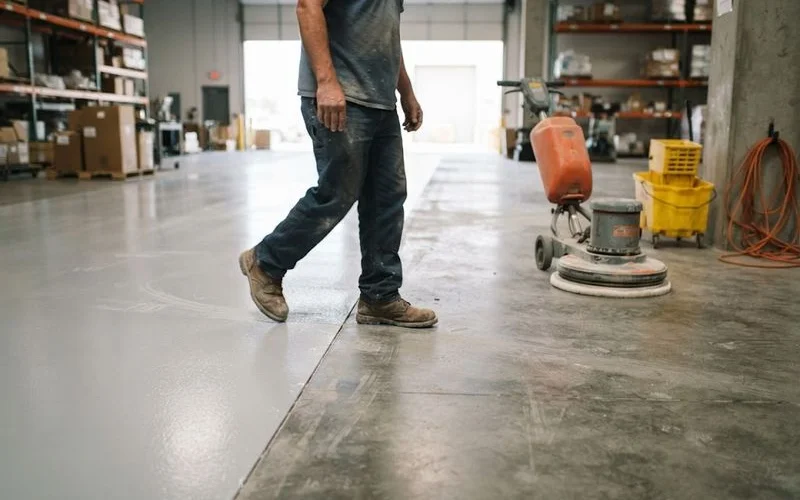
How to tell which your floor needs
Look at your slab in good light. If the concrete is structurally sound with only light surface wear and you like the idea of a natural, industrial finish, polishing is worth a quote. If you see visible cracking, patched areas, old stains that will not lift, or you simply want a specific colour or decorative look, resurfacing is the more realistic path. A contractor doing an honest assessment will usually tell you upfront if your slab is not a good polishing candidate rather than push the more profitable job.
The grind-level decision inside polishing
If polishing is the right call, the crew still needs to decide how far to grind. A light grind, sometimes called a cream finish, leaves most of the top cement paste intact and shows less aggregate. A deeper grind exposes more sand and stone aggregate for a more textured, industrial look. Deeper grinds generally cost more and take longer, since each additional grit step adds time.
Combining the two
Some jobs use both processes in sequence, especially on commercial floors: grinding to prep and level a rough or damaged slab, followed by a thin resurfacing coat rather than a full polish. This is common when a floor needs the durability of a coating but the existing concrete has enough irregularity that a straight resurfacing job over unground concrete would not bond well or look even. Ask a prospective installer whether your project needs this hybrid approach before assuming it is strictly one or the other.
Once you have a sense of which process fits, the Ontario Epoxy Flooring Directory home page is the fastest way to browse installers by category, and our methodology explains how those ratings are built.
Getting quotes that reflect the right process
When requesting quotes, describe your floor’s actual condition rather than just naming the process you think you want, cracks, staining, age of the slab, and how it is used day to day. An installer who only ever recommends the process they specialize in, regardless of what your floor needs, is a sign to get a second opinion before committing to either option.
FAQ
- What's the difference between concrete polishing and resurfacing?
- Polishing grinds and refines your existing concrete slab to a glossy finish using progressively finer diamond tooling. Resurfacing applies a new coating or overlay on top of the concrete to hide damage or change the look entirely. Polishing works with what you have; resurfacing covers it.
- Can a badly damaged floor be polished instead of resurfaced?
- Not usually. Polishing exposes more of the concrete's surface, so cracks, patches, and colour variation become more visible, not less. A floor with significant damage typically needs resurfacing so the new coating can hide the flaws.
- Which option costs less?
- Polishing is often less expensive per square foot than a full resurfacing job with a decorative coating, since it works with the existing slab and skips coating materials. The exception is a heavily damaged floor, where polishing may need extra grinding and patching that closes the cost gap.
- How long does polished concrete last compared to a resurfaced floor?
- Both can last well over a decade with basic maintenance. Polished concrete has no coating to wear through, so it tends to age more gradually, while a resurfaced coating stays looking new longer but eventually needs recoating as the topcoat wears.