Polyaspartic vs epoxy: comparing cost and cure time for your garage
By Hannah Nair · Updated 2026-06-30
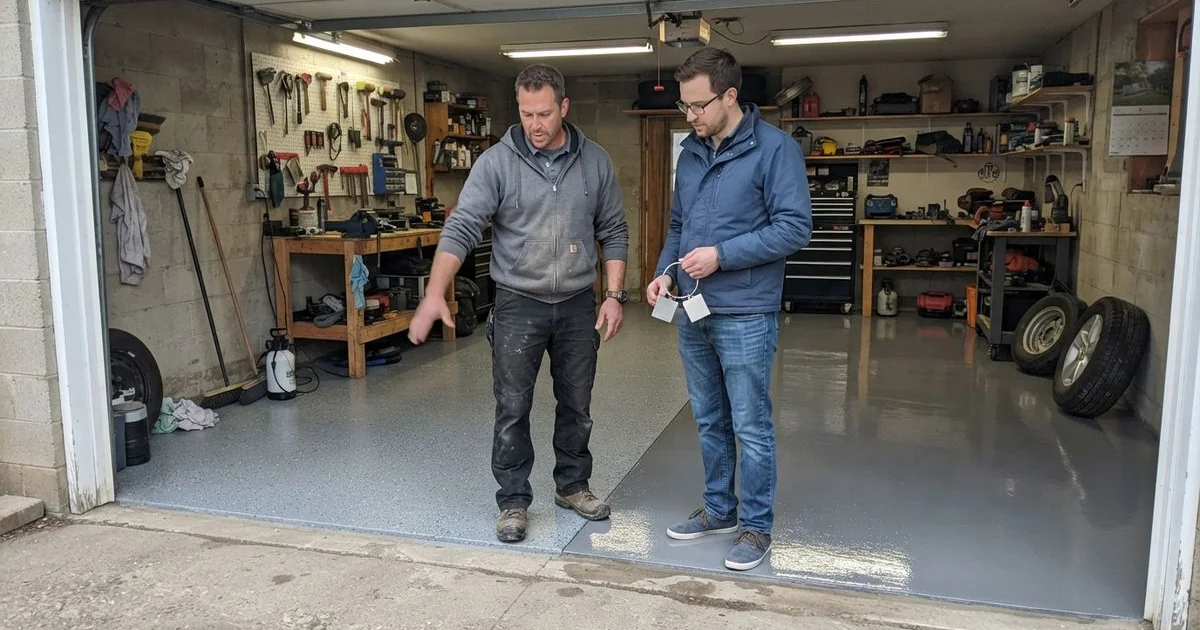
Polyaspartic and epoxy solve the same basic problem, protecting and finishing a concrete floor, but they trade off cost against speed in a way that matters most if your garage needs to come back into service quickly.
The polyaspartic and polyurea coatings category lists installers who work with both systems, which is useful if you want quotes on each before deciding.
The core trade-off
Epoxy costs less and has a long track record, but it cures slowly, often needing 12 to 24 hours between coats and up to a week before it can handle vehicle traffic. Polyaspartic costs more but cures dramatically faster, sometimes recoatable within a few hours and ready for vehicles within one to three days. If your garage can sit unused for a week without inconveniencing you, standard epoxy is the more economical choice. If you need the space back fast, the premium on polyaspartic often earns its keep.
Cost comparison
Based on typical Ontario installer pricing, a polyaspartic job usually runs 15 to 25 percent more than an equivalent flake epoxy job on the same floor. For a standard double garage (roughly 400 to 500 square feet), that premium often works out to a few hundred dollars over the equivalent epoxy job, more for larger floors or a higher number of coats. For the full range of what drives a garage floor quote up or down, see our garage floor epoxy cost guide.
| Standard epoxy | Polyaspartic | |
|---|---|---|
| Relative cost for the same floor | Baseline | +15% to +25% |
| Time between coats | 12–24 hours | 2–6 hours |
| Total install time (double garage) | 2–3 days | 1–2 days |
| Ready for vehicle traffic | 5–7 days | 1–3 days |
| UV stability | Good, some yellowing possible over years | Very good, resists yellowing better |
| Working time during application | Longer, more forgiving | Shorter, requires experienced crew |
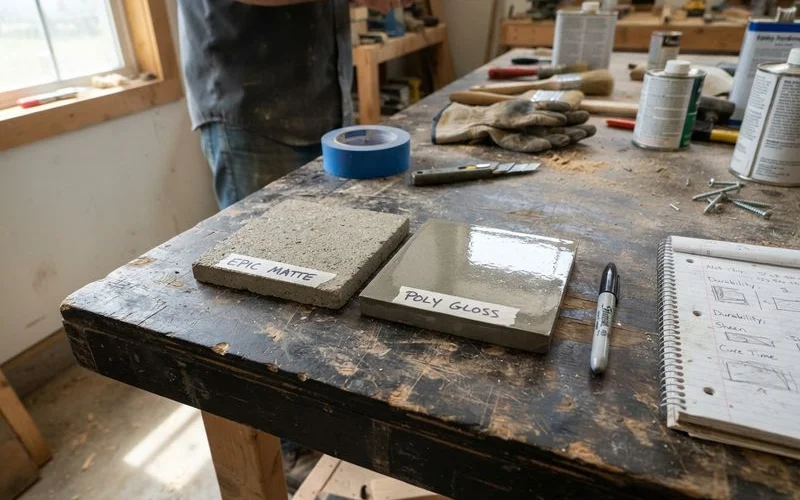
Where the extra cost is worth it
Polyaspartic tends to make the most sense for a single garage that is your only vehicle access, a commercial space where a week of downtime has a real cost, or a floor that gets direct sun through a garage door and would otherwise show UV yellowing on standard epoxy over the years. It also tends to hold up slightly better through Ontario’s freeze-thaw swings, since it stays a bit more flexible in cold temperatures than standard epoxy.
Where standard epoxy is the smarter spend
If the garage is a secondary space, you have another vehicle or parking option during the job, and budget is the bigger constraint, standard epoxy delivers nearly the same end result for less money. The finished floor looks and performs similarly once fully cured; the difference is almost entirely in how fast you get there and, over many years, marginally better resistance to fading.
Maintenance and long-term wear
Once fully cured, both systems are cared for the same way, sweeping and the occasional damp mop, and neither needs waxing or resealing on a regular schedule. The difference shows up further out. Polyaspartic’s better UV stability means a garage floor that gets direct sun through the door tends to hold its original colour longer, while standard epoxy can show a faint yellowing after several years of consistent sun exposure. Neither difference is dramatic in a typical garage that spends most of its time in shade, but it becomes more noticeable in a floor with a south-facing door that gets sun most of the day.
Chemical resistance is roughly comparable between the two once fully cured, though polyaspartic topcoats are sometimes formulated with slightly better resistance to hot tire pickup, the marks that can appear when a warm tire sits on a coating, which matters if you park immediately after a highway drive on a hot day.
Warranty terms often track the price gap
Installers frequently back polyaspartic systems with a longer warranty, covering more failure types, than their standard epoxy option, partly because the faster cure reduces the window for installation errors like dust or debris getting trapped in a slow-curing coat. When comparing quotes, check whether the warranty terms differ between the two systems the installer is offering you, not just the price, since a longer warranty on the pricier option changes the actual value comparison.
Getting an apples-to-apples quote
Ask any installer to quote both systems for the same floor so you can see the actual dollar gap rather than relying on general percentages, since pricing varies by installer and by the specific product line they use. Also ask what warranty each option carries, since that is part of what the price difference is buying. The Ontario Epoxy Flooring Directory makes it easy to compare installers who offer both systems, and the methodology page explains how ratings on this directory are calculated.
FAQ
- Is polyaspartic more expensive than epoxy?
- Yes, typically 15 to 25 percent more for the same floor size and finish level. The extra cost mostly buys a faster cure and slightly better UV and temperature stability.
- Why does polyaspartic cure so much faster than epoxy?
- The two systems cure through different chemical reactions. Polyaspartic resins react and harden much faster than standard epoxy resins, which is also why polyaspartic coatings are trickier to apply, installers have less working time before the material sets.
- Does faster cure time actually save money?
- Not directly on the invoice, but it can save money indirectly if you are losing income or paying to park elsewhere while the garage is out of commission, especially for a commercial application where downtime has a real cost.
- Can polyaspartic be applied over an existing epoxy floor?
- In some cases, yes, if the existing coating is sound and properly prepped. Most installers will assess adhesion first rather than assume it will bond, since coating over a failing epoxy layer just traps the problem underneath.