Is epoxy flooring safe indoors? VOCs, fumes and ventilation explained
By Hannah Nair · Updated 2026-07-15
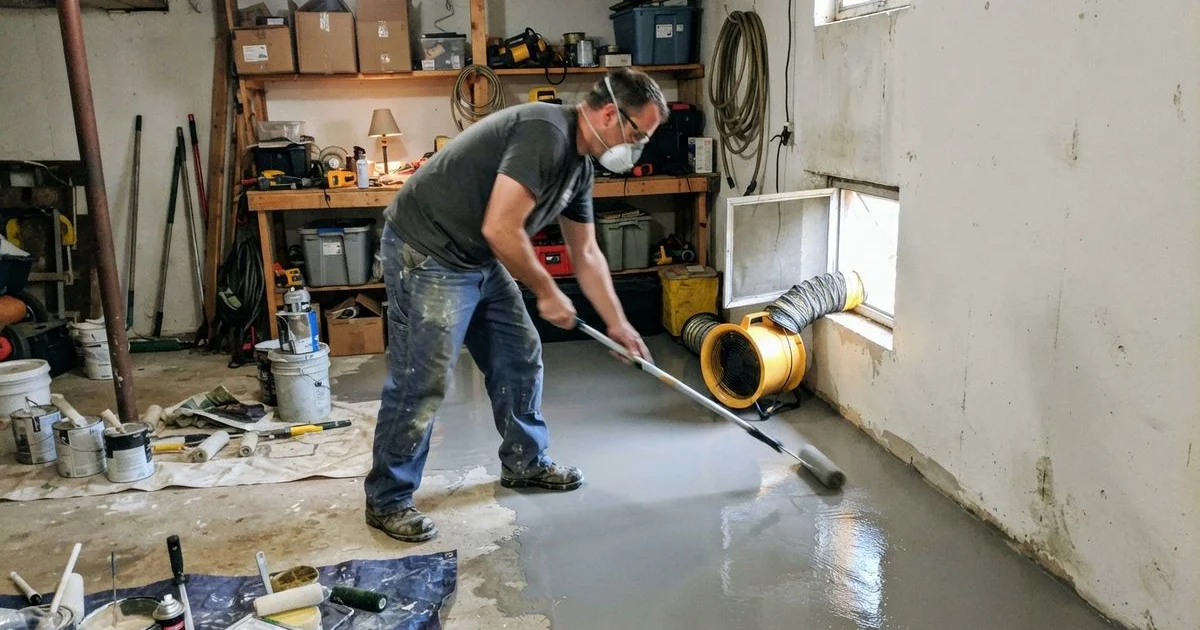
Epoxy flooring has a strong chemical smell during application that worries a lot of people booking their first job, especially for an indoor space like a basement or an attached garage that shares air with the house. The short answer: it is generally safe once installed and fully cured, but the application and early cure period deserves real ventilation, not just an open window.
This is general safety information, not medical advice. Anyone with a respiratory condition or chemical sensitivity should talk to their doctor about specific precautions before an indoor coating job.
What’s actually in the fumes
The strong smell during application comes from volatile organic compounds, or VOCs, chemicals that evaporate out of the resin and hardener as they mix and cure. Higher concentrations of VOCs can irritate eyes, the throat, and airways, and cause headaches with extended exposure in a poorly ventilated space. This is the same category of compound responsible for the smell of fresh paint, just typically stronger and longer-lasting with epoxy.
Once a coating fully cures, hardening from a liquid into a solid, it stops off-gassing at any meaningful level. The floor sitting there a month later is not releasing the fumes it had on day one.
How much ventilation an install actually needs
| Phase | What’s needed |
|---|---|
| Mixing and application | Active airflow: fans, open garage door or windows, cross-ventilation if possible |
| First 24–48 hours of cure | Continued ventilation, avoid sealing the space up tight |
| Days 2–7 | Odour fades progressively; normal ventilation is usually enough |
| After full cure (per product spec) | No special ventilation needed, off-gassing has stopped |
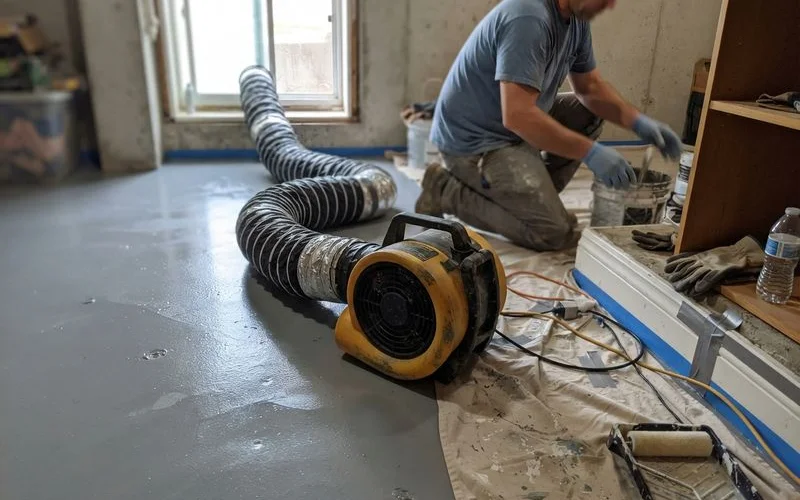
An attached garage or a basement without good airflow to the outside needs more deliberate ventilation than a detached garage with the door open. If your installer is coating a basement, ask what ventilation setup they use, box fans venting to an exterior door or window are common.
Lower-VOC options if odour is a concern
Water-based epoxy formulations generally produce noticeably less odour and lower VOC output during application than solvent-based systems, which makes them a common choice for occupied basements or homes with someone sensitive to fumes. Ask your installer directly whether they offer a low-VOC or water-based option and whether it changes the price or the cure schedule, since lower-VOC products sometimes cure a bit differently.
Who should take extra precautions
Anyone with asthma, other respiratory conditions, or a known chemical sensitivity should plan to be away from the space, and ideally the house if it is an attached garage or basement job, during application and the first day of cure. Kids and pets should stay out of the work area entirely until the installer confirms it is safe to re-enter, both for fume exposure and because the wet coating itself is a hazard to walk through.
What a professional crew does differently
An experienced installer plans ventilation before the job starts, not as an afterthought once the smell becomes noticeable. That usually means positioning fans to pull air out of the space rather than just stirring it around, timing the pour for a day when windows or a garage door can stay open, and telling you in advance roughly how long to expect noticeable odour. If an installer has no plan for ventilation and does not bring it up unprompted, ask directly before booking.
Comparing epoxy to other renovation fumes
For context, the VOC exposure during an epoxy install is broadly comparable to what happens during a fresh paint job or new carpet installation, both of which also off-gas noticeably for the first few days. None of these are typically treated as reasons to avoid the work entirely; the standard approach is ventilation and giving the space time before returning to normal use, which applies the same way here.
The bottom line
A fully cured epoxy floor is a stable, inert surface that does not pose an ongoing air quality risk. The exposure that matters is during application and early cure, and it is manageable with real ventilation and a bit of planning around who is in the house that day. If you want to compare installers who are upfront about their ventilation practices and product choices, the Ontario Epoxy Flooring Directory lists installers with published review data, and the methodology page explains how those listings are scored.
FAQ
- Do epoxy floor coatings give off harmful fumes?
- During application and while curing, yes, epoxy coatings release volatile organic compounds (VOCs) that cause a strong odour and can irritate eyes, throat or airways with prolonged exposure. Once fully cured, a coating is inert and does not continue off-gassing at meaningful levels.
- How long do I need to keep the space ventilated?
- Plan on active ventilation, fans and open access to fresh air, for the full application period plus at least the first day or two of curing. Most of the strong odour fades within a few days, though full cure and complete off-gassing can take longer depending on the product and room.
- Are water-based epoxy coatings safer than solvent-based ones?
- Water-based and low-VOC formulations generally produce less odour and lower VOC emissions during application than solvent-based systems, though they are not entirely odour-free. If indoor air quality is a concern, ask your installer specifically about low-VOC product options.
- Should kids, pets or people with respiratory conditions avoid the house during installation?
- It's a reasonable precaution for basement or attached-garage jobs, especially for anyone with asthma or chemical sensitivities. Staying elsewhere for the application day and the following one, or at minimum keeping the coated area sealed off with strong ventilation, reduces exposure.