Who's liable when a new epoxy floor peels or fails?
By Hannah Nair · Updated 2026-07-10
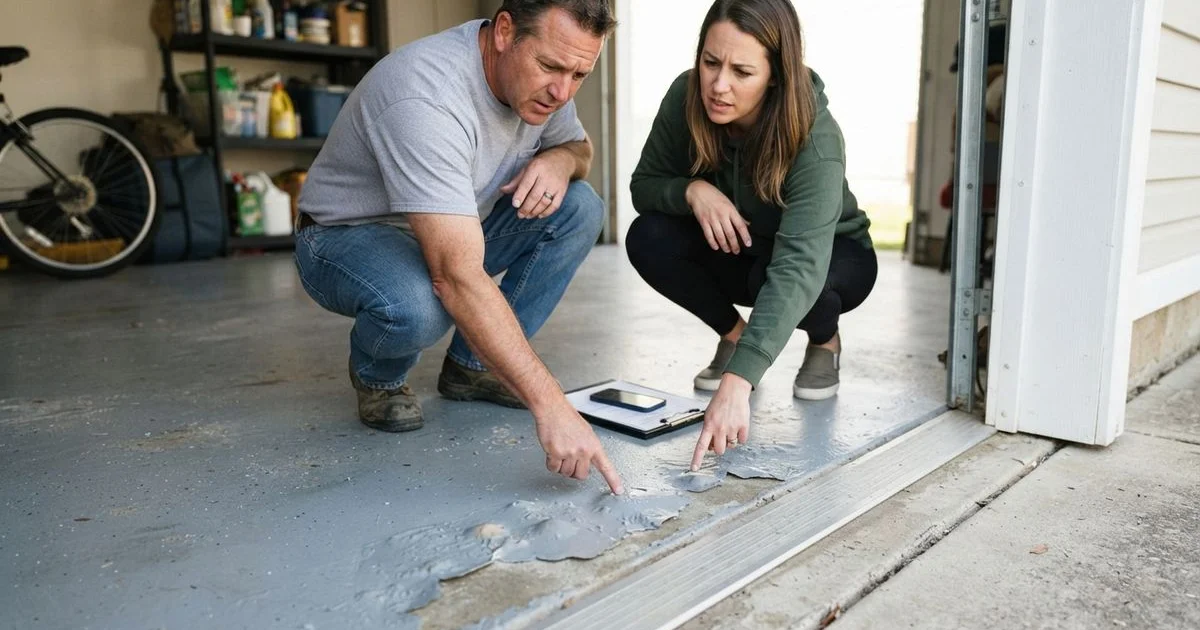
A peeling or bubbling epoxy floor a few months after installation is frustrating, and figuring out who is responsible for fixing it is not always obvious. This guide covers the general information, not a legal assessment of your specific situation; for a real dispute, a paralegal familiar with Ontario consumer protection matters can advise on your options.
The most common cause: surface prep
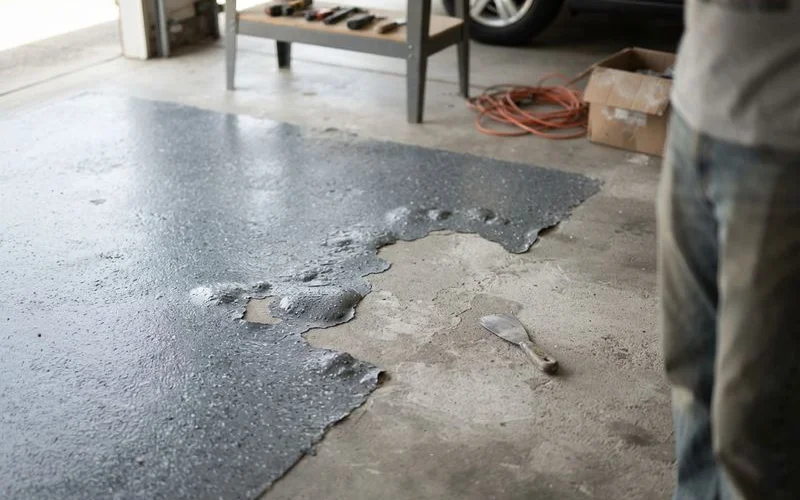
The large majority of early epoxy failures trace back to how the concrete was prepared before coating, not to the coating material itself. If the slab was not properly ground to open the surface, or a moisture test was skipped on a slab where trapped moisture later pushed the coating up from underneath, that is a workmanship issue, and responsibility generally sits with the installer.
Where liability typically lands
| Cause of failure | Usually whose responsibility |
|---|---|
| Inadequate grinding or surface prep | Installer |
| Coating applied outside temperature/humidity range | Installer |
| Skipped moisture testing on a slab that needed it | Installer, unless the homeowner declined a recommended test |
| Manufacturing defect in the coating product | Product manufacturer, sometimes covered through installer’s supplier warranty |
| Damage from a vehicle, chemical spill, or heavy impact after installation | Homeowner, typically not a warranty issue |
| Normal wear after many years of use | Neither, this is expected aging, not failure |
What role the homeowner sometimes plays
Liability is not automatically the installer’s in every case. If a homeowner insists on skipping a recommended moisture test to save money, or has the floor coated in a garage that is not fully enclosed against winter temperatures during the cure window, and the coating fails because of it, an installer has a reasonable case that the failure was outside their control. This is another reason a written scope of work matters: it documents what was recommended and what was declined.
What to do if your floor is failing
Start by documenting the problem with dated photos as soon as you notice it, since coatings can worsen over weeks and having an early record helps establish the timeline. Contact the installer in writing, referencing your contract and warranty terms, and describe the issue specifically (peeling location, size, when it appeared). Most reputable installers will send someone to assess it before disputing responsibility outright.
If the installer disputes fault or is unresponsive, a second opinion from another flooring professional can help establish whether the cause points to workmanship or something else. That assessment is useful whether you pursue the original installer, a warranty claim through their supplier, or, in a serious dispute, a small claims or consumer protection route.
Getting a second opinion
If the installer disputes that the failure is their responsibility, a separate flooring professional can often assess the floor and give an independent read on what caused it, poor adhesion from inadequate prep looks different under close inspection than damage from an impact or chemical spill. This assessment costs money, but it strengthens your position considerably if the dispute escalates, since you have a professional opinion rather than just your own account of events.
Small claims and consumer protection routes
For disputes involving a few thousand dollars or less, Ontario’s Small Claims Court is a realistic option that does not require a lawyer, though it does require documentation: your contract, photos, correspondence with the installer, and ideally a second professional opinion on the cause of failure. The Ontario Ministry of Public and Business Service Delivery also handles some consumer protection complaints related to services not delivered as agreed. Neither route is quick, so most homeowners try direct negotiation with the installer first, referencing the warranty and contract terms, before escalating.
Preventing this before it happens
The clearest way to avoid a liability dispute is to choose an installer with a documented track record and a warranty that names adhesion failure specifically, before the job starts, not after. Ask how they test for moisture and what happens if hidden slab damage turns up mid-job, since a contractor who has clearly thought through these scenarios in advance is less likely to leave you holding the bag if something does go wrong. The Ontario Epoxy Flooring Directory surfaces installer ratings built from published review data, and the methodology page explains exactly how those scores are calculated, including how recurring complaint patterns factor in.
FAQ
- Is the contractor always liable if an epoxy floor peels?
- Not always, but often. Most premature peeling traces back to inadequate surface prep or applying the coating outside its cure temperature range, both of which are the installer's responsibility. Liability shifts if the failure resulted from something outside their control, like a moisture issue the homeowner declined to have tested.
- What causes an epoxy floor to peel or fail early?
- The leading causes are insufficient surface prep (skipping grinding or moisture testing), applying coats in conditions outside the product's temperature or humidity range, and moisture pushing up from below an untested slab. Product defects are comparatively rare.
- Can I hold the installer responsible if I didn't get anything in writing?
- It's harder, but not impossible. Payment records, texts, and emails referencing the job can help establish what was agreed. This is exactly why a written contract and warranty matter before work starts, not after a problem shows up.
- Does homeowner's insurance cover a failed floor coating?
- Generally no. A coating failure is considered a workmanship or product issue, not a sudden accidental loss, so it typically falls outside standard homeowner's policy coverage. Recourse usually runs through the contractor's warranty instead.