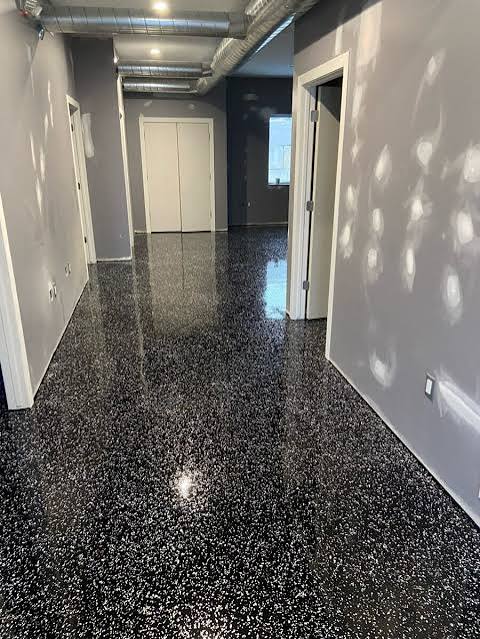
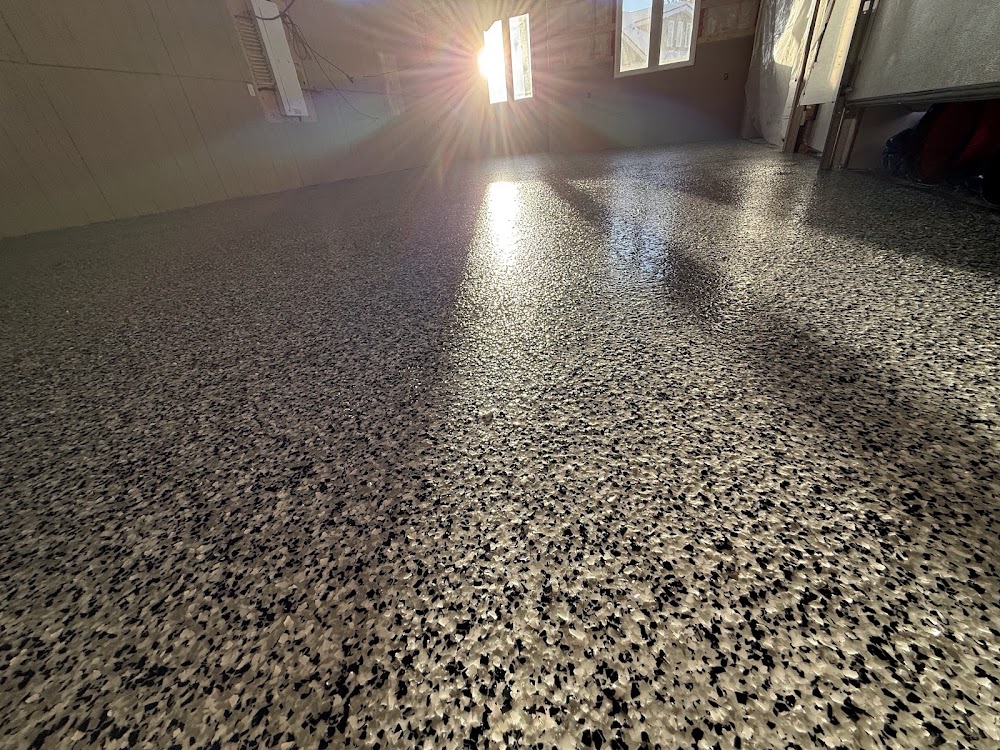
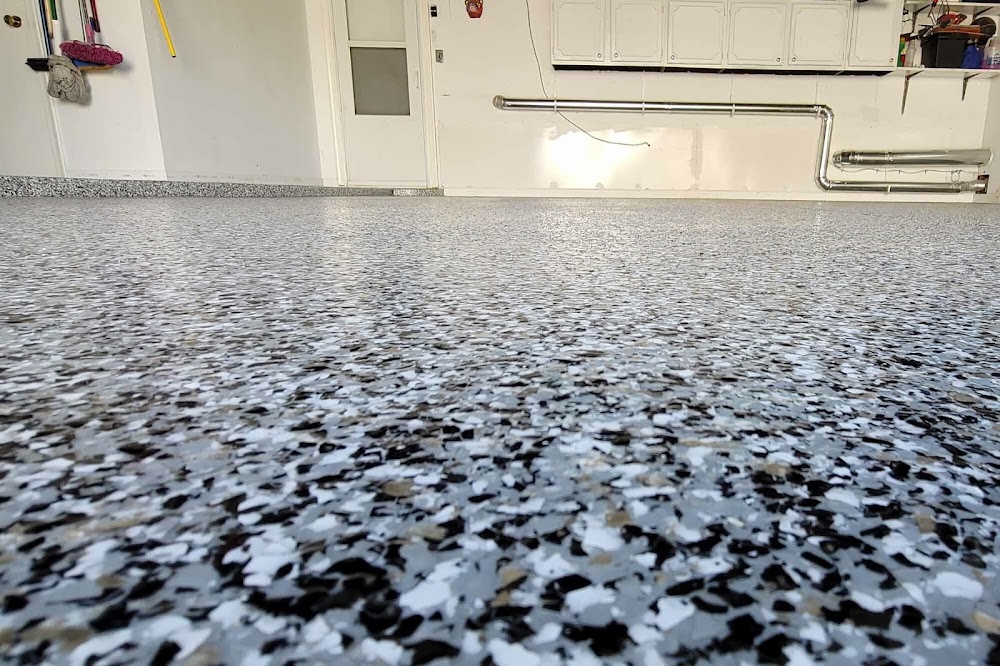
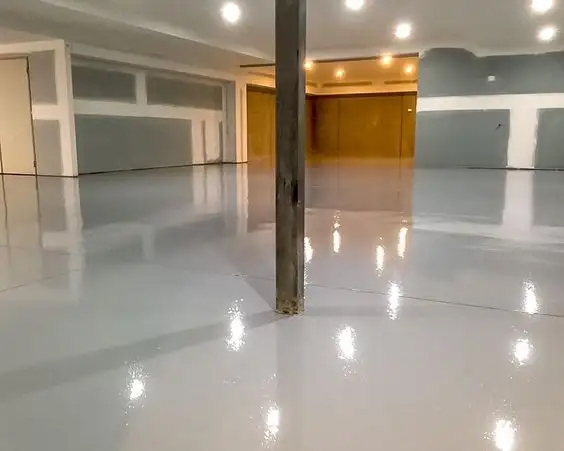
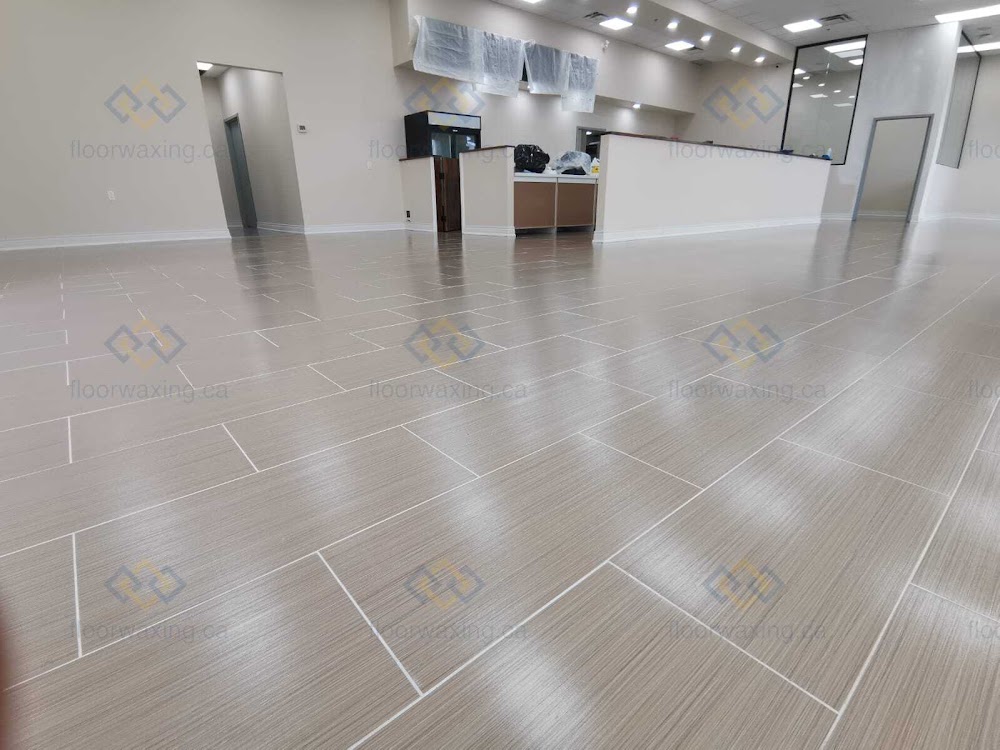
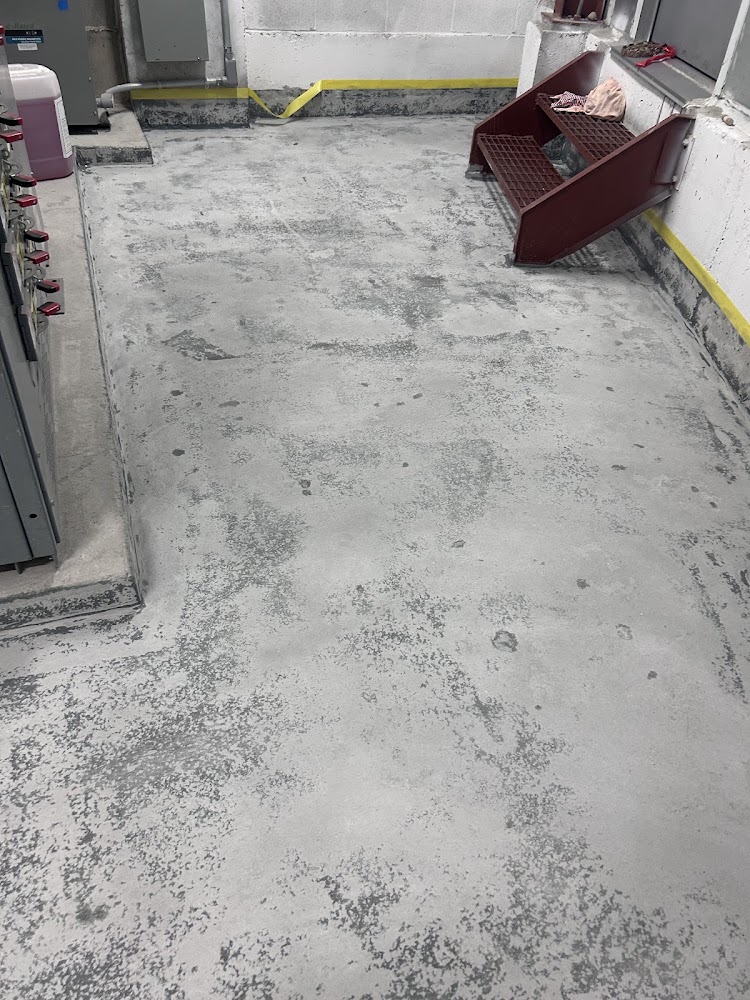
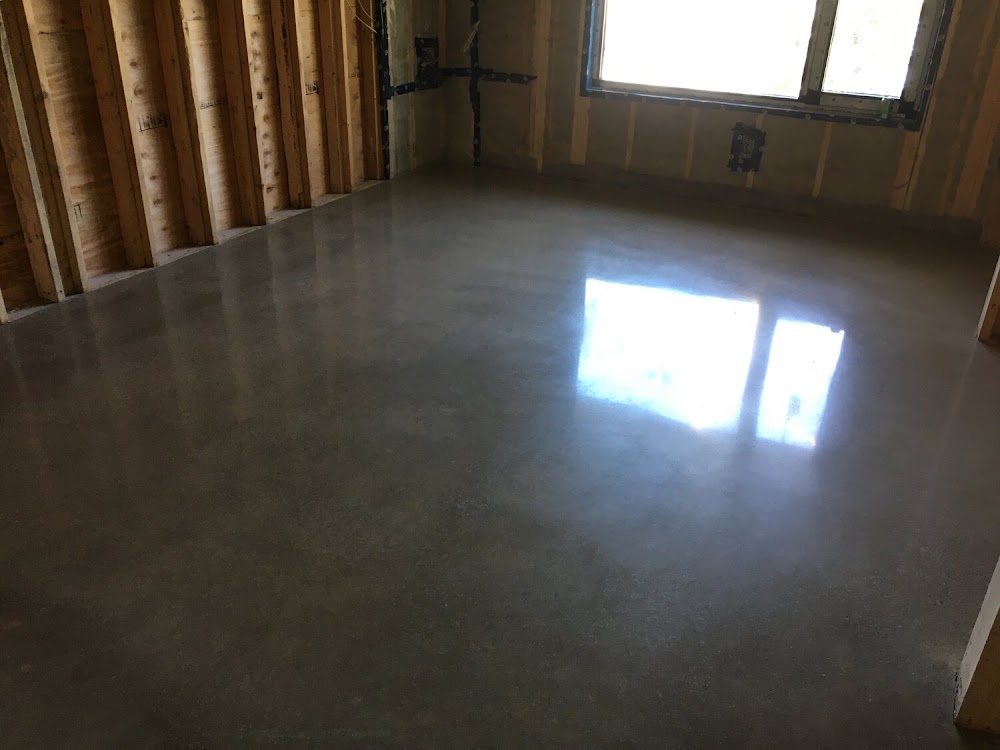
Residential epoxy flooring covers garage floors, basements, laundry rooms, and the odd finished rec room or mudroom. The process itself is straightforward on paper: grind or shot-blast the concrete to open its pores, patch cracks and low spots, apply a primer coat, then build up epoxy resin (often with color flakes or a quartz broadcast) and finish with a clear urethane topcoat for UV stability and abrasion resistance. What separates a floor that looks good for ten years from one that peels within two is almost entirely in the prep work and the product grade, not the color chosen or the flake pattern.
What to look for before hiring
- Concrete prep method: Mechanical grinding or diamond shot-blasting is the standard for residential garages. Acid etching alone is a red flag, it rarely opens the surface enough for long-term adhesion.
- Moisture testing: Basements and slab-on-grade garages can trap moisture that pushes epoxy off the slab later. A contractor who tests before quoting is taking the job seriously.
- Product system: 100% solids epoxy holds up better than water-based kits for garage traffic and hot tires. Ask what's actually going down, not just the brand name.
- Written warranty: Look for specifics on delamination, hot tire pickup, and peeling, not just a vague "satisfaction guarantee."
Our scoring weighs licensing and insurance, the prep methods a company actually uses, warranty terms, verified customer feedback, and how consistently a company shows up and finishes on schedule. See the full methodology for how each factor is weighted. For a ranked comparison of all 8 companies we cover in this category, visit the best epoxy flooring companies in Toronto guide.