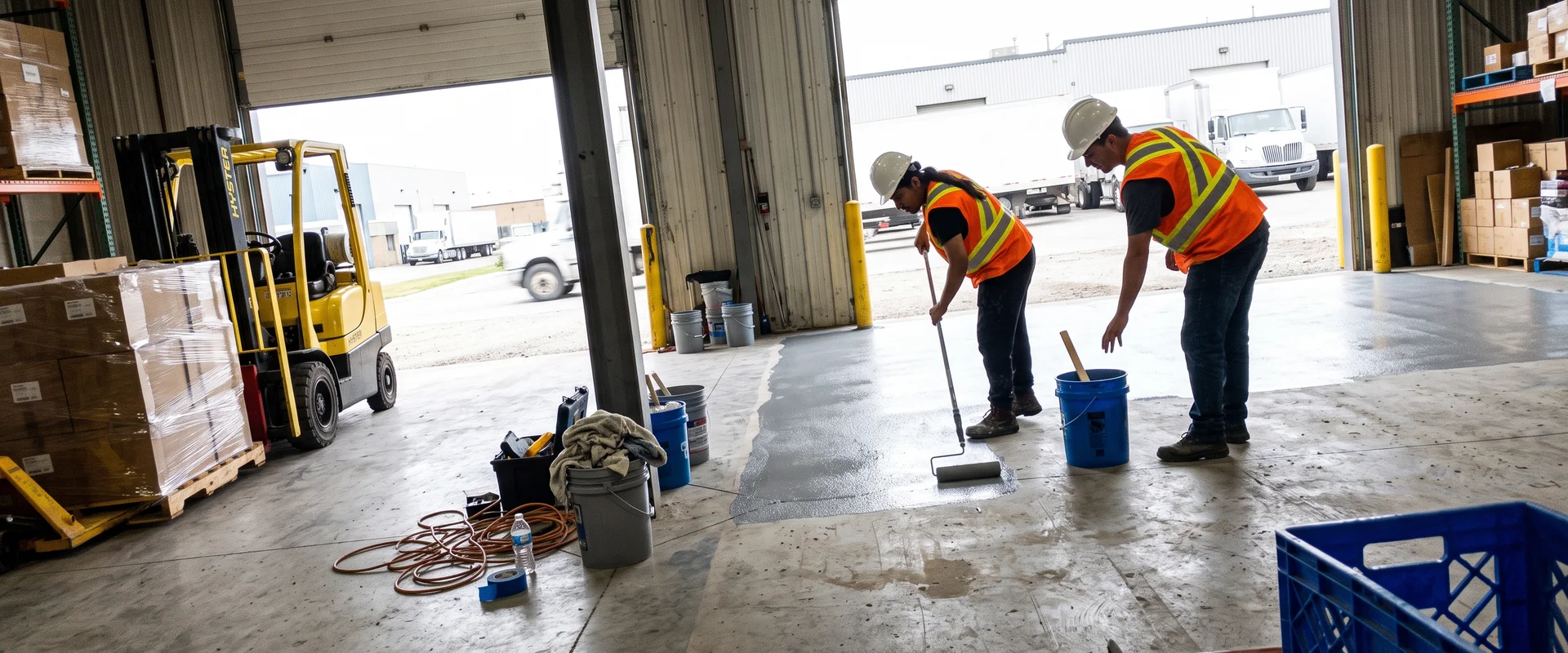
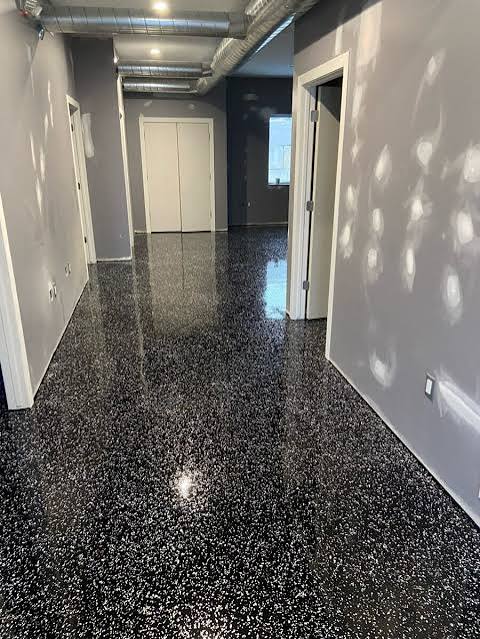
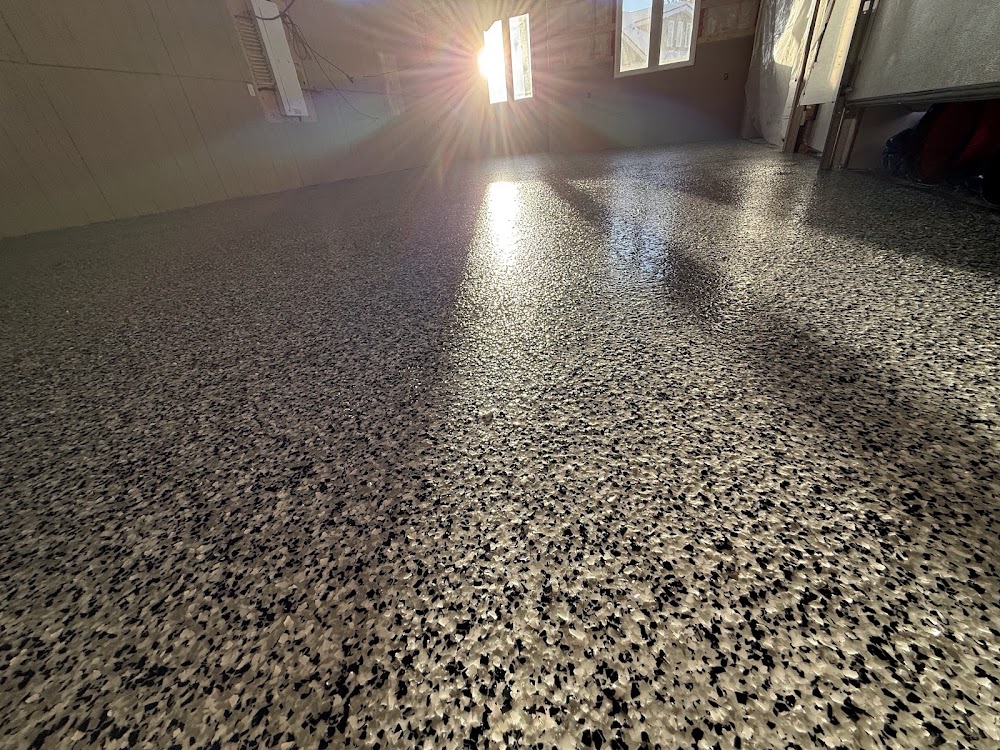
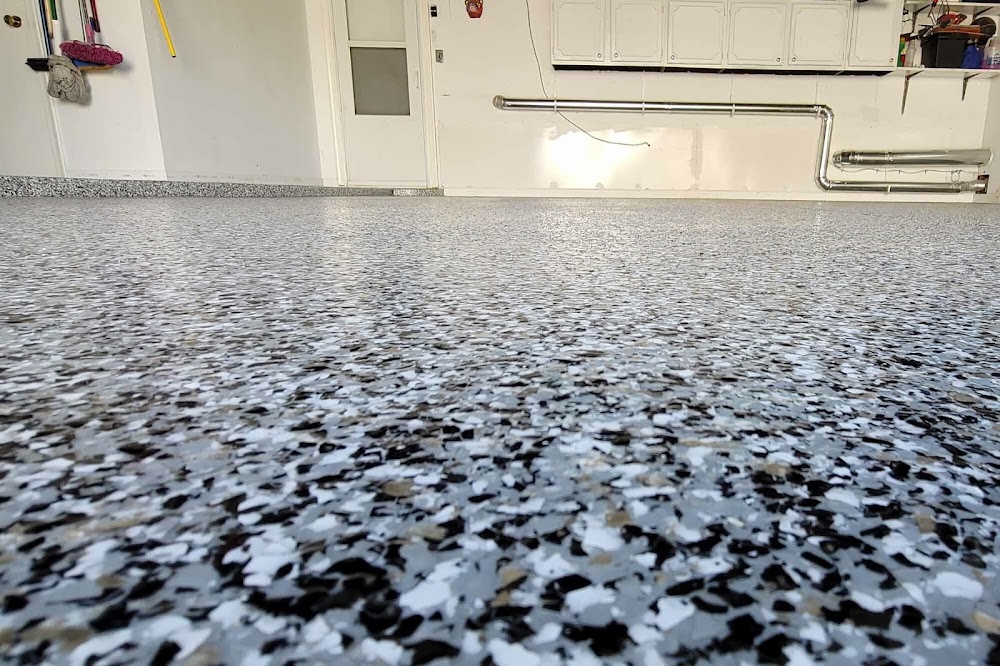
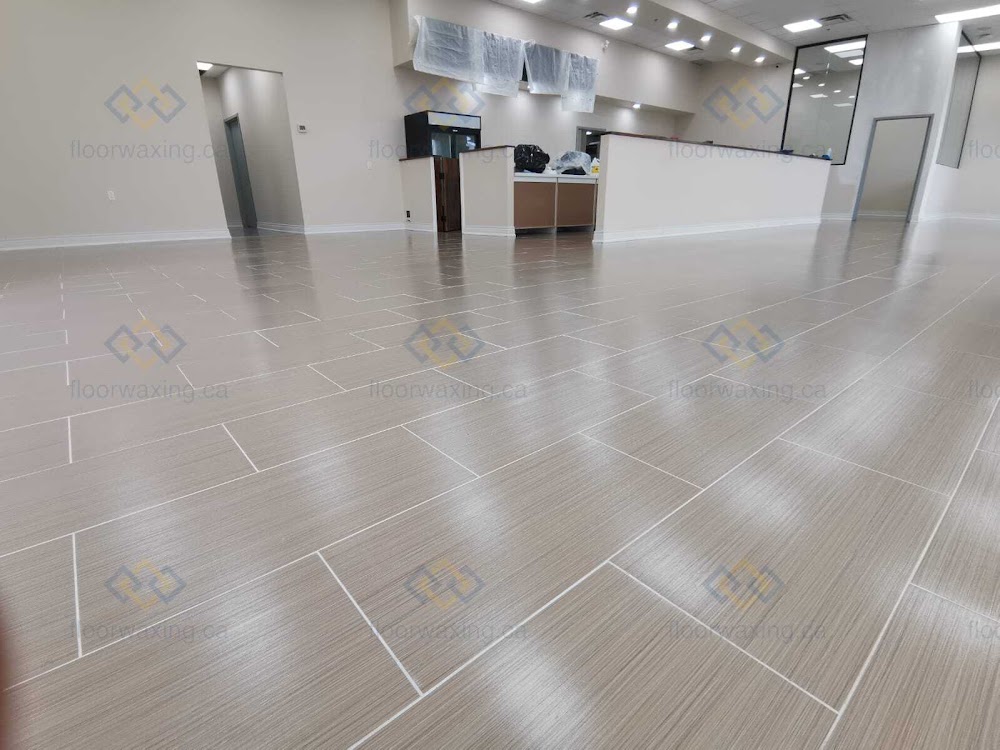
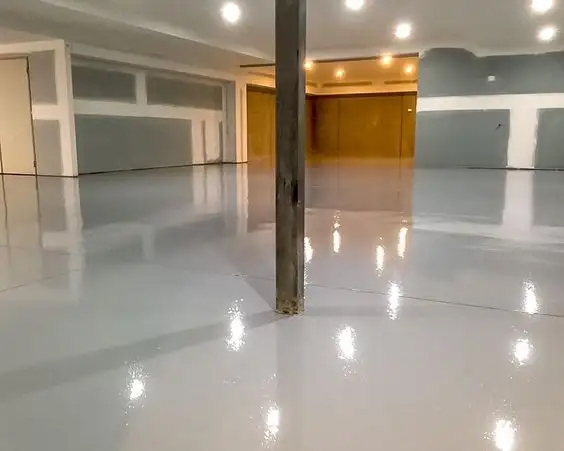
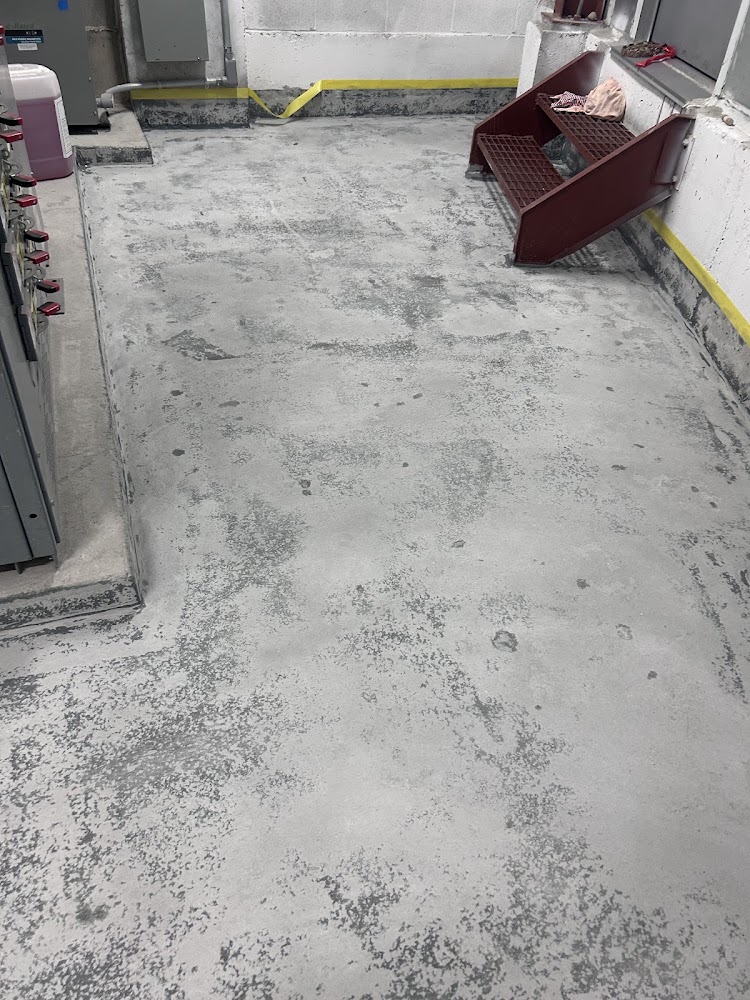
Commercial and industrial flooring covers epoxy, polyaspartic, and polyurethane systems built for spaces that take a beating: warehouses, manufacturing floors, loading docks, auto shops, restaurant kitchens, retail units, and parking garages. Unlike a garage floor coating, these jobs usually deal with larger square footage, tighter shutdown windows, and floors that have to handle forklift traffic, chemical spills, thermal shock, or constant foot traffic without cracking or peeling. The work typically involves grinding or shot-blasting the existing concrete, patching cracks and joints, moisture testing the slab, then applying a multi-coat system sized to the load and chemical exposure the floor will see.
What to look for before hiring
Ask any contractor how they handle surface prep, since a coating is only as good as the concrete profile underneath it. Find out whether they do moisture vapor testing before quoting a system, because trapped moisture is the most common cause of bubbling and delamination in Toronto's older industrial buildings. Get clarity on cure and return-to-service times, since a shop or warehouse losing production days matters as much as the price. Ask about warranty terms in writing, not just verbally, and check whether they carry commercial liability insurance sized for the job.
How we score the 6 companies
We weigh experience with commercial-scale projects, documented prep practices, warranty terms, and how they communicate through quoting and scheduling. See the full breakdown and the ranked list at our best epoxy flooring companies guide, and read how we score every contractor on our methodology page.