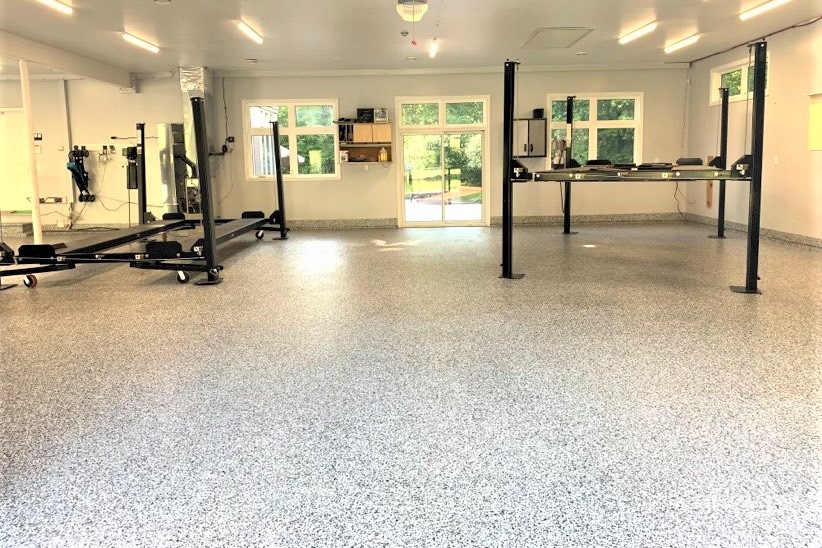
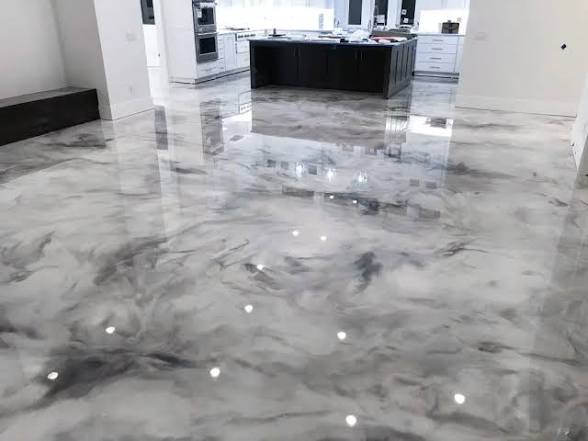
What decorative and metallic epoxy flooring involves
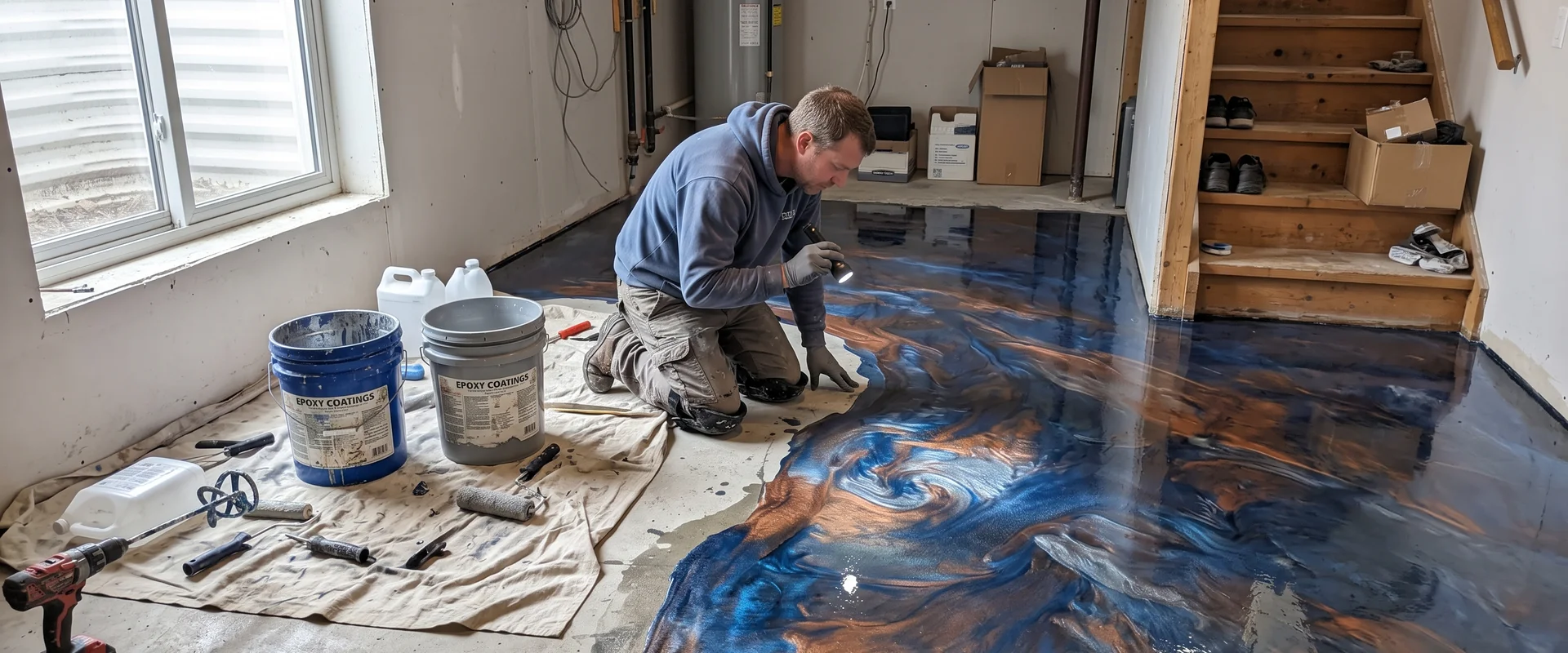
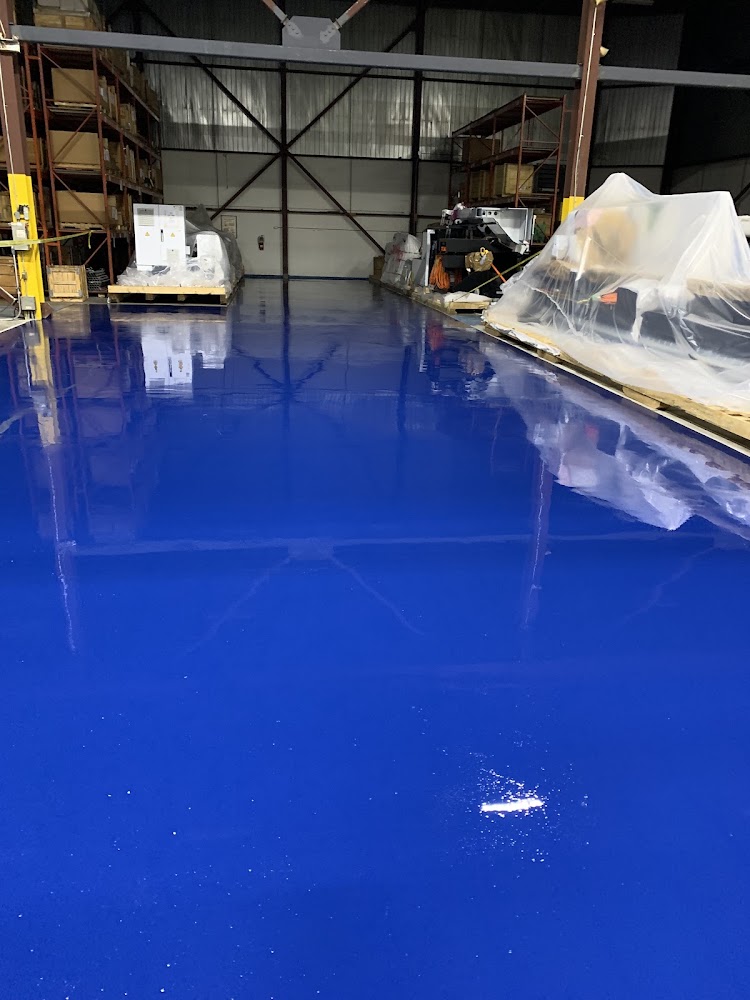
This is the higher-end branch of epoxy flooring, built for looks as much as durability. Instead of a flat, single-color coat, the applicator blends pigments, mica powders, or metallic additives into the epoxy and manipulates them while wet, using air movement, squeegees, or spatulas, to create swirls, veining, or a three-dimensional depth that looks closer to poured stone or marble than a garage floor. It's used in showrooms, retail spaces, restaurants, custom garages, and basements where a plain gray or solid-color coat isn't the goal.
Because the effect depends on how the material moves before it cures, this work is harder to get right than standard flake or solid epoxy. Surface prep still matters just as much (grinding, moisture testing, crack repair), but the pour itself takes a steadier hand and more experience reading how pigments react to humidity, temperature, and mixing technique.
What to look for before you hire
- Photos of actual past metallic or veined jobs, not just stock images, since this style varies a lot by installer
- A clear explanation of their moisture testing and concrete prep process
- Whether they offer a UV-stable topcoat, since some metallic finishes yellow or dull under sunlight without one
- A written warranty covering delamination and discoloration, not just chipping
Our scoring weighs review consistency, how contractors handle prep and warranty questions, and feedback on whether the finished color and pattern matched what was promised. For the full ranked breakdown, see the best epoxy flooring companies in Hamilton, and check our methodology for how we score every listing here.